
Light blue and gray curved divider graphic used in Mohajer Law Firm website layout sections

Category

Light blue and gray curved divider graphic used in Mohajer Law Firm website layout sections

Can a Child Refuse Visitation with a Parent in California?

  • April 12, 2023
  • Uncategorized
  • Comments Off on Can a Child Refuse Visitation with a Parent in California?

Welcome to this comprehensive video guide on child visitation rights in California, featuring seasoned family law attorney Sina Mohajer. This video addresses crucial questions like “Can a child refuse visitation with a parent?” and “What age can a child refuse visitation in California?” that have been the cause of concern for many parents navigating the intricacies of child custody and visitation arrangements. Family laws can be difficult to interpret. Therefore, if you seek competent legal advice regarding California family law matters, our family law attorneys in Arcadia are here to help. Fill out our online contact form or call us at (626) 569-5200 to schedule an initial consultation.  Transcript: If you have a custody order and you find yourself in a situation where your child is just not wanting to participate in that visitation schedule, well, this isn’t the first time this has happened. In fact, this type of occurrence happens more frequently than you think. But in this video, we’re going to cover a few topics. One is whether a child can refuse to participate in a court ordered visitation. Two is at what point does the court take into consideration that child’s preference? And then lastly, what happens if your child outright refuses to go on that court ordered visitation? Hi, I’m Sina Mohajer. I’m a family law attorney practicing in Greater Los Angeles County since 2012. I’ve been a contributing member of the Los Angeles County Bar Association and I’ve been recognized on our awards page since being rated by Super Lawyers in 2019. Can a Child Refuse Court-Ordered Visitation? The first question is, can your child refuse to go on that visitation? Well, your child can do whatever that child wants to do, he’s a kid or she’s a kid. The important thing to realize is whenever you have a custody order, the obligation does not fall on the child, but instead it falls on the parents. So if your child ends up not going on that visitation, the court’s not going to get upset at that kid, the court’s going to get upset at you for failing to follow a court order. So the question of whether a child can refuse to go on a visitation? Absolutely, there’s no stopping them. But the important part is to figure out what you should do to make sure that you don’t get any consequences by the court. Age Considerations in Child’s Visitation Refusal Now, at what age does a court consider the child’s preference. Well, the family code is very particular. At the age of 14, the court must consider the child’s preference when making a determination of what the custody arrangement needs to be. But that doesn’t mean just because they have to take their preference into consideration, that they’re going to actually listen to the child. But 14 is the golden age. Anything under 14, the court has discretion. They may listen to their preference or they may not. But at the end of the day the court’s one duty is to figure out what is in the best interest of that child and make orders that reflect that. Dealing with a Child’s Refusal for Visitation Now, what happens if your child outright refuses to go on that visitation? Well, certainly, as your child gets older, your kid’s going to have more and more opinions and feelings about the schedule that they were exercising from however long ago. And you can definitely not tie up your child and deliver them like an Amazon package to the other parent just because you’re court ordered to do that. Encouraging Your Child to Follow the Visitation Order Instead, it’s very important that you talk to your child and assure them and support them, the fact of how important it is to visit with the other parent and to follow this court order. And if that doesn’t work, perhaps you might want to reach out to the other custodial parent and ask them to kind of intervene and talk to the child and figure out what are the reasons or basis that they’re not wanting to go on that visitation. At the end of the day, if your child refuses, you can’t force them. All you can do is continue to nurture that relationship, encouraging them and give positive feedback. So that way, they choose to go on that visitation. Legal Consequences of Child Refusing Visitation But if you find yourself back in court, it’s important that you set up your chips accordingly so the court doesn’t blame you for the fact that your child does not want to go on that visit. And they don’t blame you, that you’re perhaps alienating the other parent. Legal Advice for Child Visitation Issues Now, if you find yourself in a similar situation and you’d like to talk to a seasoned family law attorney, I welcome you to contact our office. I’ll be happy to schedule you an initial consultation.

Continue Reading Can a Child Refuse Visitation with a Parent in California?

How Is Debt Divided In A Divorce In California?

What happens to debt in a divorce in California? How are debts split in a divorce? What is community debt? Sina Mohajer, an experienced family law attorney, walks you through understanding and managing the division of debt during a divorce. Contact Mohajer Law Firm if you are looking for experienced divorce attorneys in Los Angeles. We will evaluate your circumstances and guide you through seeking a fair debt division in your divorce proceedings. Fill out our online contact form or dial (626) 569-5200 to schedule an initial consultation with one of our certified family law attorneys. Transcript: When dealing with a divorce case, chances are you’re going to have to figure out how to divide the debt. Whether it’s a community debt that needs to be divided equally or a separate debt that needs to be assigned to one of the parties, it is often helpful to work with an experienced divorce attorney in Arcadia. In this video, we’re going to talk about just that. What is considered as community debt? What’s considered a separate debt? And how the courts look at it as far as figuring out how to divide it, or not at all, and just assigning that debt to an individual? Hi, I’m Sina Mohajer. I’m a family law attorney practicing in the Greater Los Angeles County since 2012. I’ve been a contributing member of the Los Angeles County Bar Association and I’ve been rated by Super Lawyers since 2019. Rules for Dividing Debt in California Divorce So what is community debt, and what is separate debt? Well, you always want to look at your benchmarks: date of marriage and date of separation. Anything acquired before the date of marriage is considered as your separate debt. The court’s not going to share that debt with anyone else, and it’s going to be yours. Anything acquired after the date of separation, that’s also a separate debt and that doesn’t get divided. The only debt that does get divided is any debt that was acquired between the date of marriage and the date of separation. How is Debt Divided in a Divorce in California And there are many ways to divide the debt. You can either split it 50/50, or depending on the assets and who takes what, you can assign the majority of the debt to one side or the other, so long as there is an equitable distribution of assets and debts, something a complex property division attorney in Arcadia regularly structures for clients. Contact Us About Your Divorce in California Now, if you’ve got questions about your case or about your divorce proceedings, feel free to contact us. I’ll be happy to schedule an initial consultation so we can discuss your situation and how our divorce and complex property division services may help.

Continue Reading How Is Debt Divided In A Divorce In California?

Is Child Support Taxable In California?

Is child support considered taxable income in California? If you’re the payor, are child support payments deductible? For more information on child support and taxes, contact us at Mohajer Law Firm. Our seasoned child support attorneys cater to all family law matters. Fill out our online contact form or dial (626) 569-5200 to schedule an initial consultation with one of our certified family law attorneys. We will evaluate your circumstances and help you seek a fair amount of court-ordered support from your former spouse. Transcript: Whether you’re receiving child support or you’re paying child support, I’m frequently asked, ‘how will this affect my taxes?’ Well, in this video, we’re not only going to cover what is child support and how it’s calculated, we’ll also discuss whether receiving child support is considered as taxable income in the state of California. And if you’re paying child support, whether you can write it off during tax season. Hi, I’m Sina Mohajer. I’m a family law attorney practicing in the Greater Los Angeles County since 2012. I’ve been a contributing member of the Los Angeles County Bar Association and I’ve been rated by Super Lawyers since 2019. What Is Child Support? How Is Child Support Calculated? So what is child support and how is it calculated? Well, in family court, it’s very simple. We use a simple calculation. It’s actually a software that was created by the state in order to create or establish a guideline support. So what that means, it takes into account your income, the other parent’s income, your custodial timeshare, along with other taxable information. And the system tells us what guideline child support is. Now, you’re not going to be able to deviate it, most likely, but there’s always some wiggle room whenever you step foot in a courtroom. Is Child Support Considered Taxable Income in California? Now, whether you’re receiving child support, is that considered as taxable income? Well, in the past, it was taxable income. But recently, the Internal Revenue Service has changed their laws and regulation, so if you’re receiving child support, it is no longer considered as taxable income. The Payor’s Perspective: Are Child Support Payments Taxable? But what if you’re the payor? What if you’re the one who’s, every month, shoveling out child support payments on a monthly basis? Well, as I’m sure you might recall in the past, you were able to write that off. Recently, that has also changed. According to the Internal Revenue Service, you can no longer write off your child support payments as a deductible. Request a Consultation: Filing Taxes with Child Support in California Now, if you’ve got questions about your child support payments or other issues pertaining to your family law case, feel free to reach out to us to schedule yourself an initial consultation. I’ll be happy to sit with you to discuss your options and figure out the best approach.

Continue Reading Is Child Support Taxable In California?

Alimony Explained: Understanding Spousal Support & Factors Courts Consider

  • March 30, 2023
  • Uncategorized
  • Comments Off on Alimony Explained: Understanding Spousal Support & Factors Courts Consider

In any divorce case, you often deal with various issues such as custody, visitation, child support, division of assets, and debts. However, alimony is a significant element, especially in cases involving disparity in income and standard of living. What is alimony? Alimony is a monthly payment that you may either receive or pay in a divorce case to maintain the same standard of living that you had while married. But how does the court determine the amount and necessity of alimony? This video is dedicated to answering these questions. Contact Mohajer Law Firm if you are looking for experienced alimony lawyers in Los Angeles. Fill out our online contact form or dial (626) 569-5200 to schedule an initial consultation with one of our certified family law attorneys. We will evaluate your circumstances and guide you through seeking a fair amount of alimony from your spouse. Transcript: In any divorce case, you’re going to have to deal with five issues. If you have children, you’re gonna have to deal with custody, visitation, and child support. If you’ve got assets and debts, you’ve got to deal with the division of those. And lastly, you might have to deal with the issue of spousal support or what’s also considered as alimony. Now, in my other videos, I’ve talked about many of those topics but specifically in this video, we’re only going to address alimony. But more importantly, we’re going to dive into what is alimony, how the court calculates alimony, as well as what factors the court considers in determining whether to even award it or not. Hi, I’m Sina Mohajer. I’m a family law attorney practicing in the Greater Los Angeles County since 2012. I’ve been a contributing member of the Los Angeles County Bar Association and I’ve been rated by Super Lawyers since 2019. What is Alimony? So, what is alimony? Well, alimony is a monthly payment, that you would either receive or pay, in order to maintain the same standard of living that you once had when you were married. Calculating Alimony: Court’s Method and Considerations Now, how the court determines how much spousal support or alimony needs to be paid, it depends on where and the pendency of the action you’re in. If it’s before trial, then it’s considered as a temporary support order, and that’s very easy to calculate. We use the software that you might have heard of in my other videos called DissoMaster, where we input your income as well as your other spouse’s income, and the software generates and lets us know how much spousal support needs to be paid. Role of Domestic Violence and Earning Capacity in Alimony Awards Now, the factors the court considers in determining whether to award spousal support is another issue. For example, if there’s some domestic violence and the aggressor is requesting for spousal support, well, the family code is very straightforward on that. An aggressor, after a finding of domestic violence, cannot ask for spousal support. As well as the earning capacity of the person who’s asking for spouse support, is going to be taken into consideration. If you’ve got a spouse who hasn’t worked for over 10 years during the marriage, because you’ve been making all the money, you’re the breadwinner. Well, once you’re separated, the court expects for that spouse to be able to become self-sustaining, so they have to get a job, whether it’s to advance their education or to get a good paying job or not. Earning capacity is going to be a huge factor in determining whether spousal support should be awarded or not. Influence of Marriage Duration on Alimony Decisions And lastly, it’s going to be the duration of your marriage. If it’s a short-term marriage or a long-term marriage, that’s going to be a huge factor in determining whether to award it or not. Free Consultation for Your Alimony Case If you’ve got questions about your case, and you would like to discuss it in more detail, I’ll be happy to offer an initial consultation.

Continue Reading Alimony Explained: Understanding Spousal Support & Factors Courts Consider

Things You Should Know As A Non-Custodial Parent

  • February 20, 2023
  • Uncategorized
  • Comments Off on Things You Should Know As A Non-Custodial Parent

If you find yourself in a custody battle, where you’re the non-custodial parent, you probably have a lot of questions, such as, how did I become the non-custodial parent? What are the rights of a custodial parent vs. non-custodial parent? What happens if the non-custodial parent misses visitation? In this video, Sina Mohajer discusses how you can overcome, modify, or change your child custody order. What are your rights and responsibilities or legal rights as a non-custodial parent? And how the court determined that the other parent gets to have primary custody. If you have any questions or would like to speak with a skilled attorney about family law, contact Mohajer Law Firm today at (626) 569-5200. Transcript: If you find yourself in a custody battle where you’re the non-custodial parent, you probably have a lot of questions as to how I became the non-custodial parent. How can I overcome it or change that order? What are my rights and responsibilities or legal rights that I have as a non-custodial parent? And how the court determined that the other parent gets to have primary custody. And in this video we’re going to address all of those. Hi, I’m Sina Mohajer. I’m a family law attorney practicing in the Greater Los Angeles County since 2012. I’ve been a contributing member of the Los Angeles County Bar Association and I’ve been rated by Super Lawyers since 2019. What Is A Non-Custodial Parent? What does it mean to be a non-custodial parent? Plainly put, it just means that more than 50 of your child’s time is being spent with the other parent. And that’s it. There’s no negativity on that. But certainly, I’m sure you want more time with your kids as any other good parent does, too. Why Did I Become the Non-Custodial Parent? But the question is, how you got here. In this video specifically, we’re going to address a scenario where I’ve had many clients come to me and saying the court just found that either, a) I was not a fit parent, or b) the other parent was just more capable of taking care of the kids. And that could be on a number of reasons. It could be alcohol issues, drug issues. It could be that on your time, on your last visitation, the children were put in harm’s way or at risk of in harm’s way where the court found that it’s best to limit your time to maybe alternating weekends or maybe no overnights. How to Change a Child Custody Order Now, how to overcome that? It’s very important and it depends on your circumstance. If the court found alcohol was an issue, then going to an alcohol program and showing that growth and improvement goes a long way. If you were not co-parenting effectively, or creating more problems in front of the children, well, then taking co-parenting classes might be the easy fix to show the court that you have grown and improved yourself in order to increase your custodial time with those kids. Now, your legal rights and responsibilities, really, you always want to look at the court order. The court order sets forth the rules and regulations that you and the other co-parent must follow. There’s no ifs, ands, or buts, and chances are, you probably have joint legal custody. If you don’t, you definitely want to talk to a seasoned family law attorney to find out exactly what your rights are. But with joint legal custody means that neither parent can make any unilateral decisions without the consent, written consent, from the other parent or a court order. Help With Your Family Law and Child Custody Case If you have questions about your case more specifically or you’d like to discuss strategy on how to overcome where you’ve already been to get that more time with your kids, feel free to give our office a call. We would be happy to offer you an initial consultation to discuss your options and to figure out the best process to take from there.

Continue Reading Things You Should Know As A Non-Custodial Parent

Filing For Divorce While Your Spouse Is Incarcerated

  • February 6, 2023
  • Uncategorized
  • Comments Off on Filing For Divorce While Your Spouse Is Incarcerated

How to Divorce Someone in Jail If you’re filing for divorce yet your spouse is incarcerated, you’re going to face quite a few obstacles in finalizing that case and getting that judgment of dissolution. In this video, Sina Mohajer discusses challenges that you could be facing when one spouse is in jail and what are some rights that the incarcerated spouse has, as far as participating in the proceedings? If you have any questions or would like to speak with a skilled family law attorney, contact Mohajer Law Firm today at (626)569-5200. Transcript: If you’re filing for divorce, yet your spouse is incarcerated, you’re going to face quite a few obstacles in finalizing that case and getting that judgment of dissolution. In this video, I’m going to address, one: can you even get divorced if your spouse is incarcerated? What are some rights that the incarcerated spouse has as far as participating in the proceedings? And the third one being, what are some other challenges that you could be facing when one spouse is in jail. Hi, I’m Sina Mahajar. I’m a family law attorney practicing in Greater Los Angeles County since 2012. I’ve been a contributing member of the Los Angeles County Bar Association and I’ve been rated by Super Lawyers since 2019. How to Divorce Someone in Jail First question is, can you even get divorced if your spouse is incarcerated? Simply put, yes. In the state of California, you only need one spouse requesting for a dissolution and the court will give it to you. Now, leading into the second question, what are some obstacles? The biggest obstacle you’re going to face is really service of process and giving proper notice to your incarcerated spouse. Because they’re in jail, you can’t just have anyone show up and serve them personally with the summons and petition. You can’t just simply send it in the mail and say, here you go, here’s a notice motion hearing coming up in a few weeks. There’s a certain channel or process that you have to go through in order to properly serve and properly notify your incarcerated spouse. Rights of the Incarcerated Spouse But what are some rights that you have as the incarcerated spouse? If you’re in jail, can you participate in the proceedings? Simple answer is yes you can. Just because you’re in jail, you’re limited in your rights, it doesn’t mean you don’t get to say anything when it comes to the divorce process. Not all issues you might be able to have a say. For example, custody visitation. You’re not going to get any, you’re in jail. But as far as division of assets and debts, spousal support, child support, you do get to participate in those particular issues when it comes to your dissolution case. Experienced Divorce Attorney in Los Angeles If you have further questions or like to discuss strategy or how we can help, we’ll offer you an initial consultation to dive deeper in. And if the information you heard here today, you liked it or it answered your questions, definitely hit that like button. And if you want to stay connected with any future videos, hit that subscribe button so you don’t miss a thing.

Continue Reading Filing For Divorce While Your Spouse Is Incarcerated

Difference Between Protective Order vs Restraining Order

  • February 2, 2023
  • Uncategorized
  • Comments Off on Difference Between Protective Order vs Restraining Order

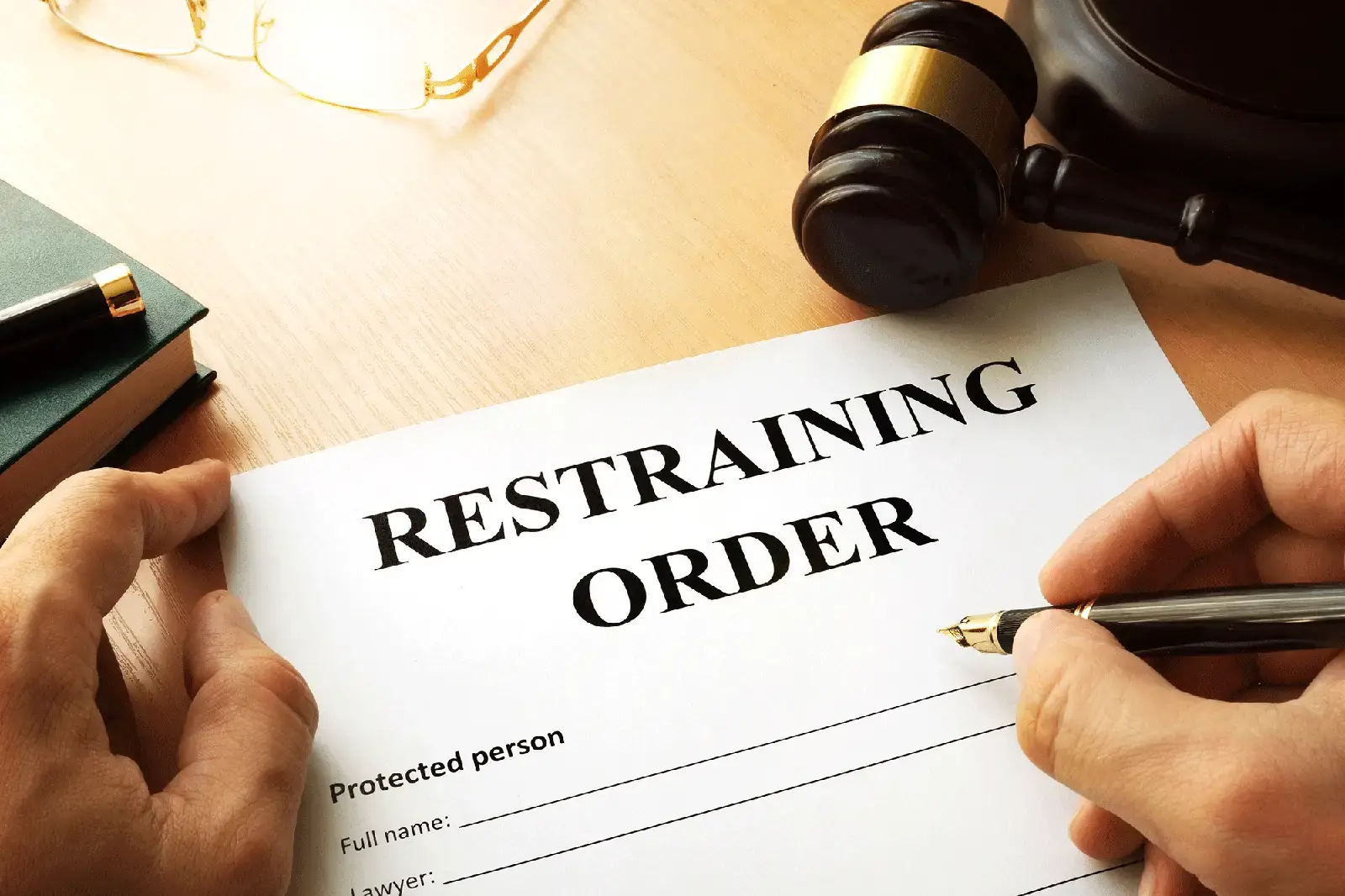
In this video, family law attorney Sina Mohajer discusses the difference between a Protective Order vs Restraining Order. Who can file which one, and what really does it do as far as protecting you and your loved ones? If you have any questions or would like to speak with a skilled attorney about family law, contact Mohajer Law Firm today at (626) 569-5200. Transcript: If you need protection from a spouse, domestic partner, or significant other, there are two distinct types of orders you can seek: a protective order and a restraining order. In this overview, we will discuss the differences between a protective order and a restraining order, including who can file for them and how they function to protect you and your loved ones. Hi, I’m Sina Mohajer. I’m a family law attorney practicing in the Greater Los Angeles County since 2012. I’ve been a contributing member of the Los Angeles County Bar Association and I’ve been rated by super lawyer since 2019. Nature of the Request Now the difference between a protective order and a restraining order really comes down to the person who’s moving forward with such a request. A protective order, in nature, is criminal. So that means only the district attorney or the police department can get you a protective order. A restraining order, on the other hand, is you’re the moving party. So you would actually be petitioning the court, requesting for that type of relief. A protective order does not necessarily require a pending criminal action. If there has been an incident of violence and you contact the police, they can often grant a short-term emergency protective order. This provides enough time to access the family court system with the help of a domestic violence lawyer in Arcadia to file for a restraining order. A restraining order, however, if you are granted your temporary orders, it will last until the next hearing date, which is usually 21 days out. Protect Children, Loved Ones, and Third Parties Now, a restraining order or a protective order can not only protect you, it can protect your children, your loved ones, third parties, and it restrains the other side from coming in contact with you, either directly or indirectly. It keeps them 100 yards away from you, your third party, your loved ones, your children, their school, your place of business, your vehicle, your residence, and so forth. It’s a laundry list of things that the restrained person cannot do. And if they violate that protective order or the temporary restraining order, they can be arrested and face criminal charges. Permanent Restraining Order Now, after that 21 days of the expiration of your temporary restraining order, that is the time when the Court’s going to allow the restrained party to be able to give their defense for the court to determine whether a more permanent restraining order can be granted or not. And those restraining orders are usually granted anywhere between one to five years. And they can also be renewed at least one time. And when they are renewed, the courts usually renew it for a period of five years. File It Right the First Time So it’s very important to speak to a seasoned family law attorney to understand what had occurred and what’s the best approach to take on this case. Because once you get into that courtroom, there’s no do-overs. You can’t refile your restraining order simply because you didn’t present the evidence that you had available to you at that time. You would have to wait until further abuse or further violence occurs in order to get your foot back into that door. Help With a Protective Order or Restraining Order in California If you like to talk to a seasoned family law attorney, we offer a free initial consultation. I’ll be happy to sit with you to discuss what occurred, what happened, and who needs protection, to figure out the best approach, and figure out the best foot to put forward in order to get you that temporary restraining order, which will ultimately get you the permanent restraining order. Feel free to reach out through our contact page or by phone to schedule a confidential meeting.

Continue Reading Difference Between Protective Order vs Restraining Order

What Is An Automatic Temporary Restraining Order?

  • January 18, 2023
  • Uncategorized
  • Comments Off on What Is An Automatic Temporary Restraining Order?

In this video, family law attorney Sina Mohajer discusses common and important terminologies that you should know in any family law case, and specifically, “ATROs.” What does that mean? If you have any questions or would like to speak with a skilled attorney about family law—including Automatic Temporary Restraining Orders—contact Mohajer Law Firm today at (626)569-5200. Transcript: Epstein credits, watts charges, FLARPLs, ATROs, keech declaration. Am I even speaking English? These are common terminologies and important terminology that you should know in any family law case. And in this video we’re going to cover one of them. Hi, I’m Sina Mohajer. I’m a family law attorney practicing in the Greater Los Angeles County since 2012. I’ve been a contributing member of the Los Angeles County Bar Association and I’ve been rated by Super Lawyer since 2019.   ATROs in a Divorce Proceeding ATROs, what does that mean? Well, ATRO stands for automatic temporary restraining order. Within the ATRO itself, there’s multiple orders that you cannot violate. Financial Restrictions In a divorce proceeding, you cannot take liens on properties, you can’t empty bank accounts, you can’t remove the other side from your health insurance, you can’t cash out your 401K or close out your pension, or change even beneficiaries to your life insurance policy. All these things need either an agreement or a court order. Child Custody Restrictions If you have kids, a parentage action, or if you have kids in a divorce proceeding, you are prevented from removing the children from the state of California without consent or court order. Even if it’s for a weekend getaway. And you can definitely not change the residence of the minor children as well.   Help With Your Temporary Restraining Order in California If you have questions about your case, or you like to explore different avenues on how to handle your family law case, or there’s other questions—maybe other terminologies that I just offered that gibberish before—feel free to give our office a call. We offer a free initial consultation, I’ll be happy to sit with you one-on-one.

Continue Reading What Is An Automatic Temporary Restraining Order?

What Items Are Considered Assets In A Divorce Case?

  • January 16, 2023
  • Uncategorized
  • Comments Off on What Items Are Considered Assets In A Divorce Case?

Are you dissolving your marriage and want to know how to divide assets in a divorce? When involved in a divorce case, you’re going to need to split up your property and assets, regardless of whether you have a lot or little. In this video, Sina Mohajer discusses the process of splitting those property and assets in the divorce case and what items are considered as assets in a divorce case. If you have any questions or would like to speak with a skilled attorney about family law, contact Mohajer Law Firm today at (626)569-5200. Transcript: When involved in a divorce case, you’re going to need to split up your property and assets, regardless if you have a lot or a little. Now, in this video, I want to discuss the process in splitting those property into assets in a divorce case. But specifically, I want to address the questions as far as what items are considered as assets in a divorce case. What constitutes as community property and separate property assets? And whether you can even get divorced without splitting up any assets. Hi, I’m Sina Mahaja. I’m a family law attorney practicing in the Greater Los Angeles County since 2012. I’ve been a contributing member of the Los Angeles County Bar Association and I’ve been rated by Super Lawyers since 2019. Assets in a Divorce Case When you’re looking at items that are considered as assets in a divorce, you want to remember the general rule of thumb: anything acquired from the date of marriage to the date of separation certainly must be included in your judgment. And they need to be divided, as far as who’s going to take what and so forth. But to be safe, you should also include any property or assets that you acquired prior to marriage and even post-separation. The more clarity or specificity you add to your judgment is going to make it a lot cleaner divorce and it won’t leave any uncertainty or any vagueness as far as who’s going to take what assets. Now, some assets to consider to divide are, for example, going to be real property, real estate. If you have any, they need to be divided. If you guys own a business, that needs to be divided as well. Other items, for example, personal items, vehicles, cars, jewelry, stocks, bonds, pensions, retirements, anything that can be tangible or has any type of value are going to be considered as assets in a divorce case. Community Property vs Separate Property Now, the difference between community property and separate property, it depends on that general rule of thumb I just mentioned. Anything you acquire from the date of marriage to the data separation is going to be automatically presumed as community property. That doesn’t mean you can’t overcome that presumption. And anything acquired prior to the date of marriage or post separation is going to be considered as your separate property. Overcoming the Presumption of Community Property Now, to overcome that presumption of community asset or community property during the duration of your marriage, it depends on how you acquire that asset. If you were to receive it as an inheritance or a gift, that will overcome that presumption. It would be considered as your separate property asset. And at time a divorce, you’re only splitting up the community property. So that means, the law states, any community assets that are considered to belong to the community, you divide those equally 50/50, but all your separate property assets, those belong to you and they should not be touched. Can You Get Divorced Without Splitting Up Assets? Now, the last question is can you even get divorced without splitting up any of your assets? The short answer is yes and no. You can’t get a final judgment on all issues without splitting up your assets because that is one of the issues that need to be resolved in your divorce case. Now, when I said, yes, you can get divorced, you can do what’s called a bifurcation of status, meaning you can request a court to dissolve your marriage and give you the status of being a single woman or a single man. And then deal with the property issues at a later time. But your case wouldn’t be complete. Help With Dividing Your Assets in a Divorce Now, if you’ve got questions about your divorce case or you’d like to speak with a seasoned family law attorney, we offer a free initial consultation. Feel free to reach us online or contact us over the phone. I’ll be happy to sit with you one-on-one.

Continue Reading What Items Are Considered Assets In A Divorce Case?

Possibilities and Risks in Mother’s Custody Case

  • January 10, 2023
  • Uncategorized
  • Comments Off on Possibilities and Risks in Mother’s Custody Case

Are you a mother who’s dealing with a child custody case? Do you want to know how to win a custody case for a mother? In this video, family law attorney Sina Mohajer discusses three things that can affect your case: factors that could potentially weaken a mother’s case, what would constitute an unfit mother, as well as ways to strengthen your case when dealing with the issue of child custody. If you have any questions or would like to speak with a skilled attorney about family law or a child custody case in California, contact Mohajer Law Firm today at (626)569-5200. Transcript: If you’re a mother dealing with a custody battle, you cannot assume that you’re going to automatically get custody of your children simply because you’re the mom. In fact, you have the possibility and the risk of losing custody if the court finds that that’s what’s in the best interest of your children. Now, in this video we’re going to cover three parts: The factors that could potentially weaken your case, or a mother’s case, in the issue of custody What would constitute as an unfit mother As well as ways to strengthen your case when dealing with the issue of child custody Hi, I’m Sina Mohajer. I’m a family law attorney practicing in the Greater Los Angeles County since 2012. I’ve been a contributing member of the Los Angeles County Bar Association and I’ve been rated by Super Lawyers since 2019. Restricting Contact of the Child and the Other Parent One of the biggest factors that could potentially weaken a mother’s case in the issue of custody is when the mother is not promoting significant and continuous contact of the child and the other parent. Now, I had a case, for example, where mom ended up contracting COVID. You know, COVID is still amongst us, but the child was a potential exposure. She was not diagnosed, or she was not tested positive for COVID, yet mother decided not to allow the child to leave the house because of quarantine issues and prevented the father from having any custodial time. That is a huge no-no. Courts don’t like to see that. In fact, if the child is even sick with COVID or without COVID, a simple cold or a fever, as long as there’s not a doctor’s note that says that this child has to remain in bed for 24 hours or what have you, then there’s nothing stopping from the other parent of caring for that child. And that is one issue that can potentially weaken your case as a mother in a custody battle. Communication Another key factor is communication. I have seen countless of times where moms just simply don’t communicate. Why? Because they feel this sense of entitlement that they’re the ones who gave birth. And you did. But the court doesn’t give you any sense of entitlement as far as what you can and cannot do with your children. In fact, the law is very clear that both parents have equal rights to these kids, regardless who carried them for nine months, who spent hours in the delivery room and delivered this child. So, communication is another big factor. By not communicating where the child is residing, not communicating as far as extracurriculars or school enrollment, medical treatment or anything of that sort, could potentially harm your chance of maintaining or even getting primary custody. Unfit Mothers How a court finds a mother to be unfit are the same factors that the court may look at with any parent determining if they’re unfit. Factors may include having an alcohol or substance abuse addiction, whether you’re a negligent parent, for example, unable to maintain your household duties as well as child care duties. So many factors that come in, where it places maybe the children’s safety and their well-being at risk, would constitute you as an unfit parent, or specifically an unfit mother. Strengthen Your Case Ways to strengthen your case when it comes to a custody battle is honestly to be the best co-parent you can possibly be. Now, you don’t have to bend over backwards and always give in to the other parent. And let them see the children whenever they want. But to be more reasonable, if there’s times for example, the non-custodial parent is unable to see the child on a particular day that the two you might have agreed upon, and a different day could possibly work, then go ahead and do that. Don’t fight based on principle, but really look at as far as what’s going to bring you most favorable to the court, in their eyes. Another way is communication as well. Now, the court always wants to give primary custody to the parent that’s going to foster a great relationship with a non-custodial parent, the parent who’s going to follow the court order and allow that frequent and consistent contact with the other parent as well. Help With Your Child Custody Case in California Now, if you’ve got questions about your case, or you like to explore different avenues we offer a free initial consultation, feel free to reach out online, give us a call at the office, and I’ll be happy to sit with you one-on-one.

Continue Reading Possibilities and Risks in Mother’s Custody Case